How can AI help us do this faster?
Add AI to the current process. Optimize one step. Preserve the handoffs.
 LFMA CONFERENCE SESSION A NEW RELATIONSHIP WITH WORK
Leading change and governing
the future of work.
A practical exploration for mission-driven finance leaders.
From people using AI to people managing AI work.
Define the task. Give AI the context. Review the work it brings back.
THE SHIFT IN PROGRESSAdd AI to the current process. Optimize one step. Preserve the handoffs.
Redesign around the outcome. Keep people where judgment and relationships matter.
A faster step inside a poor workflow only moves the bottleneck.
Processes change first. Roles within those processes follow.
People challenge the evidence, weigh consequences, and decide where AI must stop. Judgment and control remain central to the work.
SELECT A PART OF THE WORK TO EXPLOREAI takes more preparation.
People take more direction.
Controlled, ad hoc use is only a beginning. Stronger foundations make greater delegation possible.
You produce the work and make the decisions. AI helps with a specific question or step when you need it.
You write the financial commentary and ask AI to help clarify a difficult explanation.
Before delegating more: make the outcome, the limits and human accountability clear.
Work cultures often reward reactive behavior. AI is often used in the same way.
Immediate problems. Isolated knowledge and experience. Siloed information.
Integrated processes. Shared knowledge and context. Shared foundations.
Shared knowledge helps AI execute consistently without losing the judgment behind the work.
Experience interprets context. People weigh consequences and competing needs. Some decisions need a conversation.
Record purpose and evidence. Make approval limits and exceptions clear. Agree what a good result looks like.
Prepare trusted information and apply documented context. Follow agreed steps within authority. Pause when context or evidence is insufficient.
Human attention stays with exceptions, consequences and accountability.
Start with one workflow, a clear owner and a measurable outcome.
Learn to work through decisions with agents, beyond looking up facts. People delegate the right work, describe the goal and context, and discern whether the answer holds up.
Individual agent capability needs a shared foundation to become enterprise capability. Data models describe how information is stored, while ontologies capture context, semantics, constraints and governance.
The agent reasons, but the system enforces what must be exactly right. Fixed controls and safeguards protect sensitive data and critical decisions, so outputs can be trusted every time.
A clear outcome. An accountable owner.
Trusted sources. Clear decision criteria.
Review exceptions. Measure results.
Connected agent tasks. Human oversight.
Alignment Purpose, workflow design and authority limits
Literacy Training, adoption and continued practice
Guardrails Reliable information, shared definitions and ownership
Evidence and clear accountability support each increase in delegation.
LCS NORTHWEST / PROGRAM MANAGEMENT
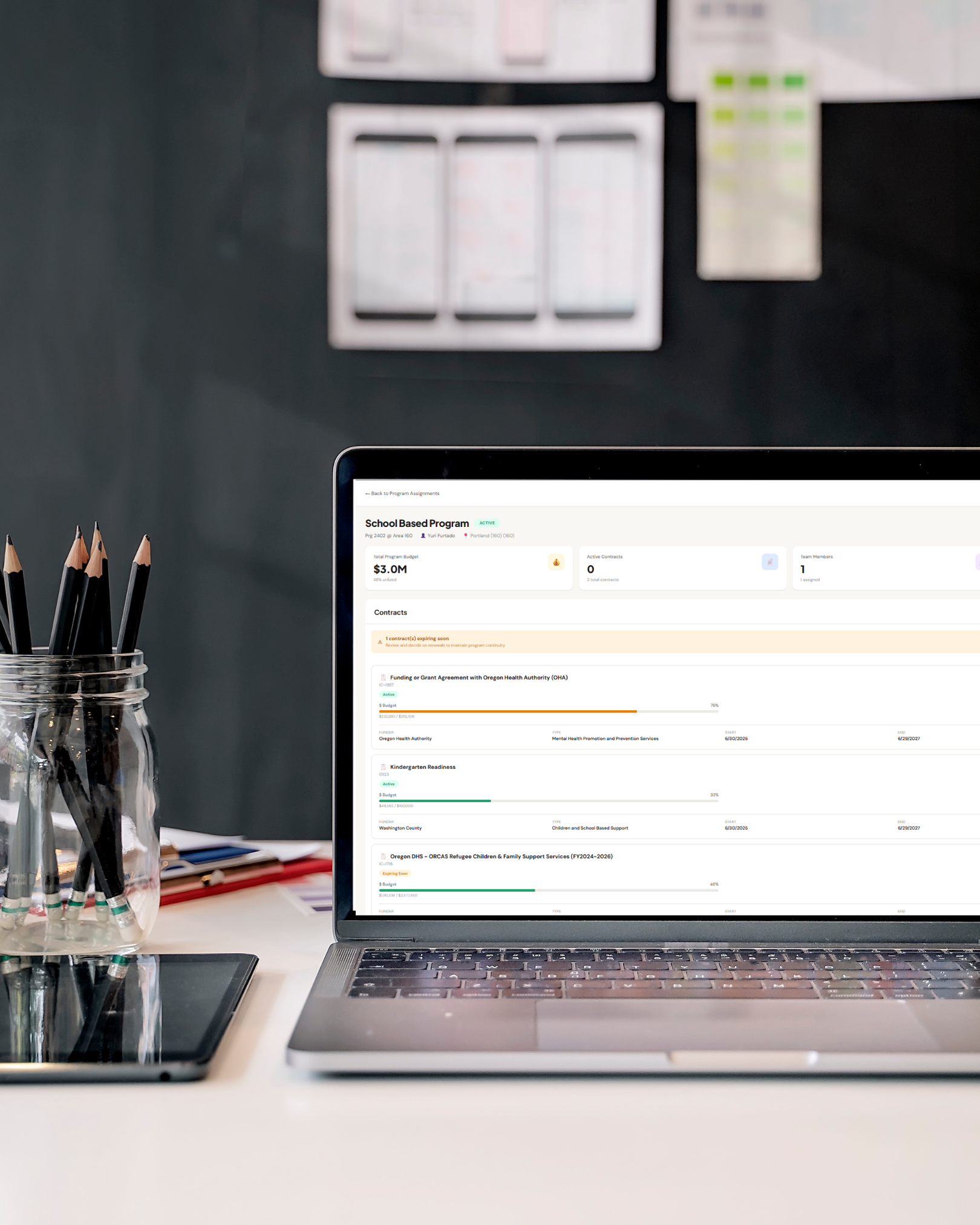
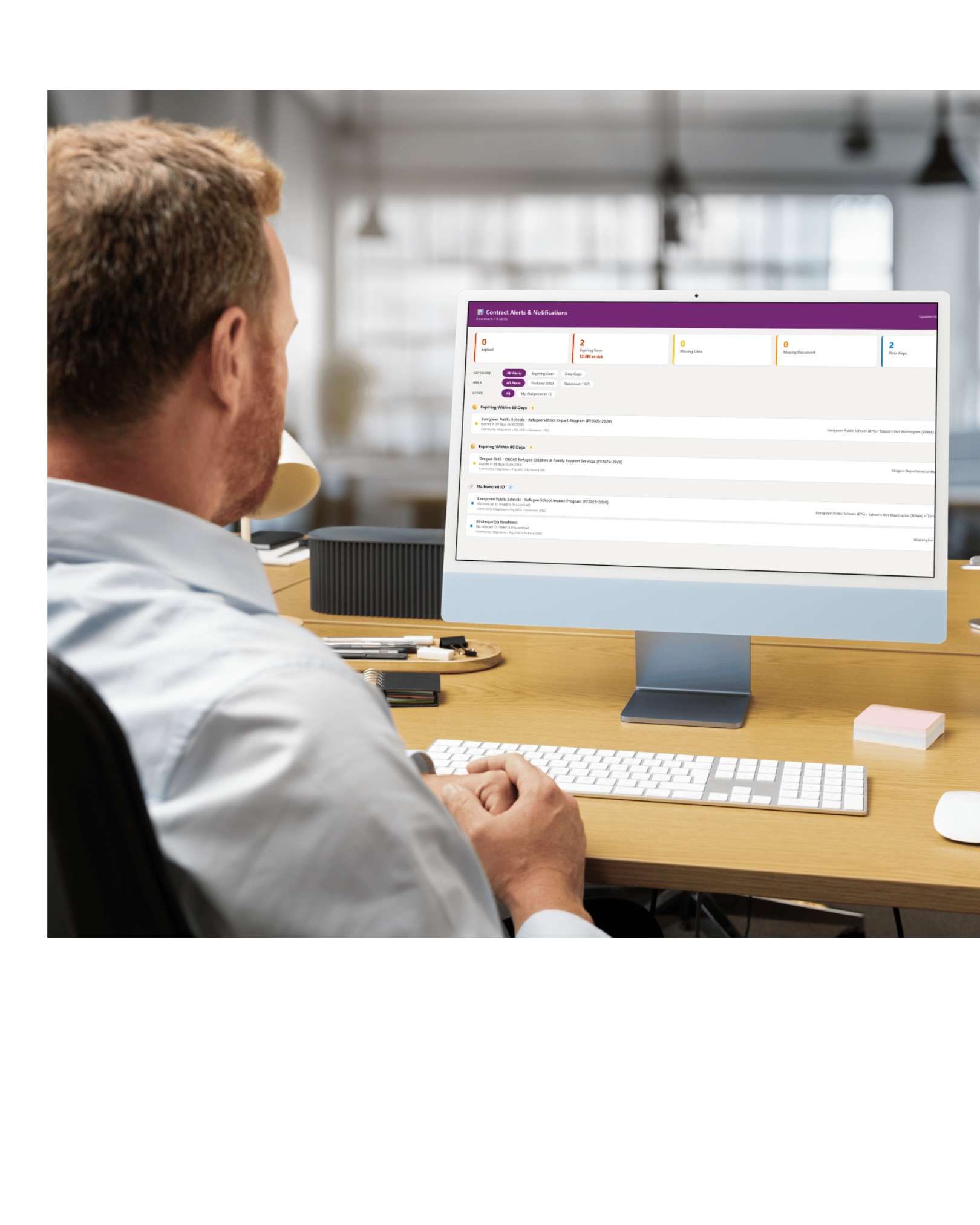
01Understand the contents of programs, their requirements and who is eligible.
02Bring unstructured information buried in contracts to frontline teams.
03Improve reliability, speed of access and consistency of information.
“All budgets for programs are in SharePoint.”
“I have all the contracts for my district in this folder.”
“Our Contract Management system has all the information about our contracts.”
OWNERSHIP“Who is Maria’s supervisor?”
SHARED DEFINITIONS“I don’t work this program, I work the ORCA Program.”
CURRENT INFORMATION“This contract is expired.”
ACCOUNTABILITY“Why is our CEO the owner for all these contracts?”

 Reliable data
Policy
Reliable data
Policy
 Operational systems
Access & protection
Operational systems
Access & protection

“On Thursday I had a situation with one of my clients, who is a single mom with an 11-month-old child who called me and said that she is in a park with her baby, and nowhere to go.
… I asked the AI Agent what to do in a situation like this, and I was pleasantly surprised by how helpful it was.
It guided me through clear immediate steps, including phone numbers to call and organizations to contact (without direct link) such as mental health crisis lines, housing resources, local shelters, drop-in centers, and Basic Needs Assistance programs.”

Every hour spent moving information is an hour not spent applying judgment, building relationships, or advancing the mission.
to put back into the mission.
Illustrative scenario, not a forecast.As foundations strengthen and more judgment can be shared with AI, roles and organizational structures can move toward directing and orchestrating.
I do the work.
AI assists when needed.
AI drafts.
I improve and approve.
I define the outcome.
AI completes the task.
I design how people
and agents work together.
Fear deserves a conversation—and a practical role in shaping what comes next.
Shift toward being an AI-enabled operator: direct people, systems, and agents to deliver outcomes. Build AI fluency alongside domain knowledge. AI can handle repetitive drafting, research, analysis, reporting, and documentation, while you own the workflow, judgment, and outcome.
Build AI fluency alongside domain knowledge. Bring your experience to governing AI and interpreting its decisions. Keep the work transparent, name the human owner, and preserve the evidence needed to challenge a result.
Use AI to remove low-value activity and unnecessary handoffs. Agree how recovered capacity will support meaningful work, and measure the effect on the team.
Become an active architect of the change. Leadership must explain human and AI accountabilities, policies, and expectations. People should help redesign the processes they know, govern outcomes, and oversee AI use in their own domains.
The human workflow owner sets the outcome, standards, authority and stop points.
Collects requests and clarifies scope so the right work starts with the right context.
ILLUSTRATIVE ROLE BOUNDARIES
Organize requests, identify missing information, and prepare a clear brief.
A person resolves conflicting priorities and approves material changes in scope.
Manage an outcome through a designed operating model: named agents, defined work, clear controls and human accountability.
Engineering time compressed, with teams still responsible for quality. Product teams also report turning weeks of research into hours.
AI supports the preparation. Finance managers retain final posting approval.
Multiagent orchestration supports more complex HR transactions behind one interface.
An agent team supporting time entry and approval, invoicing, reconciliation and payroll.
REPORTED EXAMPLES · RESULTS VARY BY WORKFLOW AND ORGANIZATION
Different skills. Multiple employees. Manual coordination.
Limited headcount budget. Variable demand, fixed costs. “Do it all” roles become single points of failure.
One human leader. Multiple systems. Hundreds of users.
Agents have defined responsibilities. Outputs pass through human decision gates.
| Foundation | Policy | Process | People | Governance | Technology |
|---|---|---|---|---|---|
| Literacy | Define the process | AI and human skills; optimize jobs; aligned training and standard work; onboarding. | |||
| Alignment | Redesign workflows to use AI. | Share knowledge and experience; remove siloed decisions; build common understanding. | Ontology: definitions and dictionaries; models; authorization flows. | Data contracts, models, flow and integration. | |
| Guardrails | Acceptable use; privacy and breach handling. | Enforce policy in redesigned processes; audit and monitor AI use. | Monitor human usage; authorize human decisions. | Monitoring and auditing; role-based authority; least privilege. | Tools and platforms; licensing and budgets; authentication and authorization. |
What changes would you expect in your organization?
Execution may shift to the machine. Human roles expand in accountability and responsibility.
A defined outcome
to own.
A named account
and permissions.
A human to review
and approve.
An auditable history
of what happened.
Prepare work, summarize evidence
and recommend next steps.
Policy exceptions, material risk
or low-confidence outputs.
Self-approve, exceed authority
or bypass audit and controls.
Accountability stays human.
01Will your organization be expected to become more efficient as AI advances?
02Will boards, regulators, donors and others demand more stringent measures and results?
What are your thoughts?
01 What work draws people away from your mission?
02 What truly needs human judgment or relationships?
03 What could you redesign if capacity were no constraint?
Design the future workflow, rather than copying today’s steps. Make the outcome measurable.
Turn stakeholder interviews, business objectives, operational data and opinions into data-backed priorities that drive ROI.
Spark uses AI to identify valuable, achievable use cases before time and budget are spent.
hello@proactiviti.com ↗HQ / SEATTLE
1400 NW Leary Way, Suite 400
Seattle, WA 98107
+1 206.800.8390
Proactiviti LLC